
Special Abortion Issue: June 24, 2023
One year into the post-Roe reality. The social and political impact on the lives of women has been devasting. Twenty-five million people of childbearing age, in twenty-five states, are affected by abortion bans. Abortion bans are unpopular nationwide and to keep tightening the grip, extremists are working to disenfranchise voters and make it more difficult to get abortion rights on the ballot.
There is a wide range of tactics that the far right uses to silence the majority who support rights. I get into more detail in my essay, Speaking Truth in a Post Dobbs America, but shaming and silencing voices of dissent is a highly effective strategy.
Another tactic is to slur and demean women and shame them into silence. Over and over again, far-right activists lie about who gets abortions and why. Harlots or victims. They use terms like evil, selfish, promiscuous, or alternately, weak, victimized, and forever damaged. This is propaganda. One way to counter the lies is to share real-life abortion stories. These essays bring empathy and understanding to the issue of reproductive rights. When we push past the slogans and memes and get to the heart of people’s stories, we take back the narrative about reproductive rights.
Speaking Truth in a Post Dobbs America
In this special issue, nine writers share their abortion stories. Each post includes resources on how to stay informed and how you can help fight for reproductive justice.
- Speaking Truth in a Post Dobb’s America
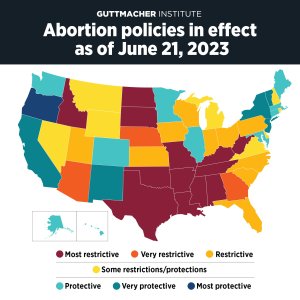 On June 24, 2022, the Supreme Court struck down Roe v Wade and five decades of precedent that said women have the right to bodily autonomy and privacy, that women could not be forced or coerced into carrying a pregnancy …
 - The Lucky One
 Don’t think I was just some crazy wacko hippie. After years working in a medical office, mentored by Shirley, a tough eighth kid of nine born in Harlem, I’d seen a lot. Set and cast broken bones, assisted with vasectomies, …
 - Origins
 Inception At first, we passed each other under the starry sky, in the depth of winter darkness. I had just left the small sauna which nestled into the trees at the edge of the neighborhood where I rented a room. …
 - Green Onions
 One evening when I was 21, I had two of my oldest friends, Isabel and Irene, over for dinner in my Bushwick apartment. I made barley risotto out of a new cookbook. We talked about classes, boys, parents, New York …
 - Something to be Celebrated
 You’d look much better if you’d smile. At nine, I “became a woman.” I dressed in my mother’s royal purple saree and gold bangles. I was gifted ladoos and kaja katli. My head was anointed with oil, my hair braided …
 - THE SIGN
 The color appears red but on closer examination, more like wine — a Cabernet, not Burgundy or Chianti. At that place, tall trees create shadows, causing the color to darken more. When walking, I can see the sign a …
 - Baby I’m Lost
 My first real true love was a boy I stole from my younger sister in 1972. He was a worldly 23 to my naive 17 and lived in his own apartment in Tacoma, not far from the military base where …
 - For Shame
 I am eight years old, sitting in the back seat of my mother’s mini van. The engine is running even though we are parked. My mother jiggles her leg nervously in the passenger seat. We are parked outside the Biddeford …
 - Sweet Dreams
 I lay in my twin bed and stared at the ceiling. I twisted myself around in the sheets and worried myself to sleep. In the morning I drove to my classes at Queens College in my Honda Civic, shifting the …
 - A Wanted Unwanted Child
 In 1967 I was born at Saint Mary’s Hospital in Santa Monica California. My birth certificate names me as “Babygirl McCorry ”. My mother was in her teens. I was adopted by a couple in their early thirties. My adopted …
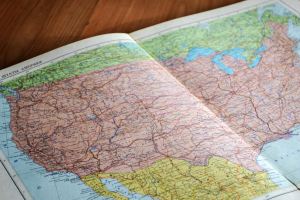
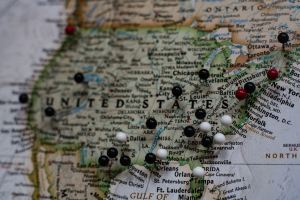
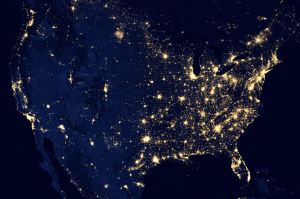
A note about the images. We selected maps as a unifying theme for the images in this piece. This issue is very much about the state of abortion rights in the United States of America. But maps also represent journeys. Each writer’s story is part of their journey.
 Tangled Locks Journal 📓 is pis of a yypyyyoe