
by Abigail Myers
Marci was apt to report even bad news while tucking wisps of brassy hair, sometimes streaked pink, behind her hearing aids and the stems of her chunky black glasses, then laughing. Born two months premature, feverish and sixty percent deaf, she survived her journey to life this side of the womb and then her journey to the United States from Mexico, an absent father and then an abusive stepfather—but none of this seemed to matter to her on a day-to-day basis. She cracked jokes, but quietly, and never cruelly. Her handwriting was bubbly and broad like that of so many girls her age, but taller and thinner, like she was trying to make up for being four-foot-nine. She had size-four feet that she wore in bright black-and-white Jordans. She went to speech therapy and loved reading out loud. She remained stubborn good friends with a troubled boy because he’d been kind to her in middle school.
When she said she needed to talk one day, I welcomed her into my classroom after school. I liked to keep the lights off when I wasn’t holding class, and I lifted the ancient, leathery roller shades to let in the sun. The classroom was in the old wing of the school, a hundred years old, and it was showing its age, but nevertheless had some character in the transoms over the doors and the closet that was just the right size for my desk (even if I rarely used it, covered as it was with worksheets to be graded, whiteboard markers in every color, and forgotten coffee cups). She tossed her backpack on the floor, draped her pleather puffed-sleeved jacket over the back of a chair, and sat down.
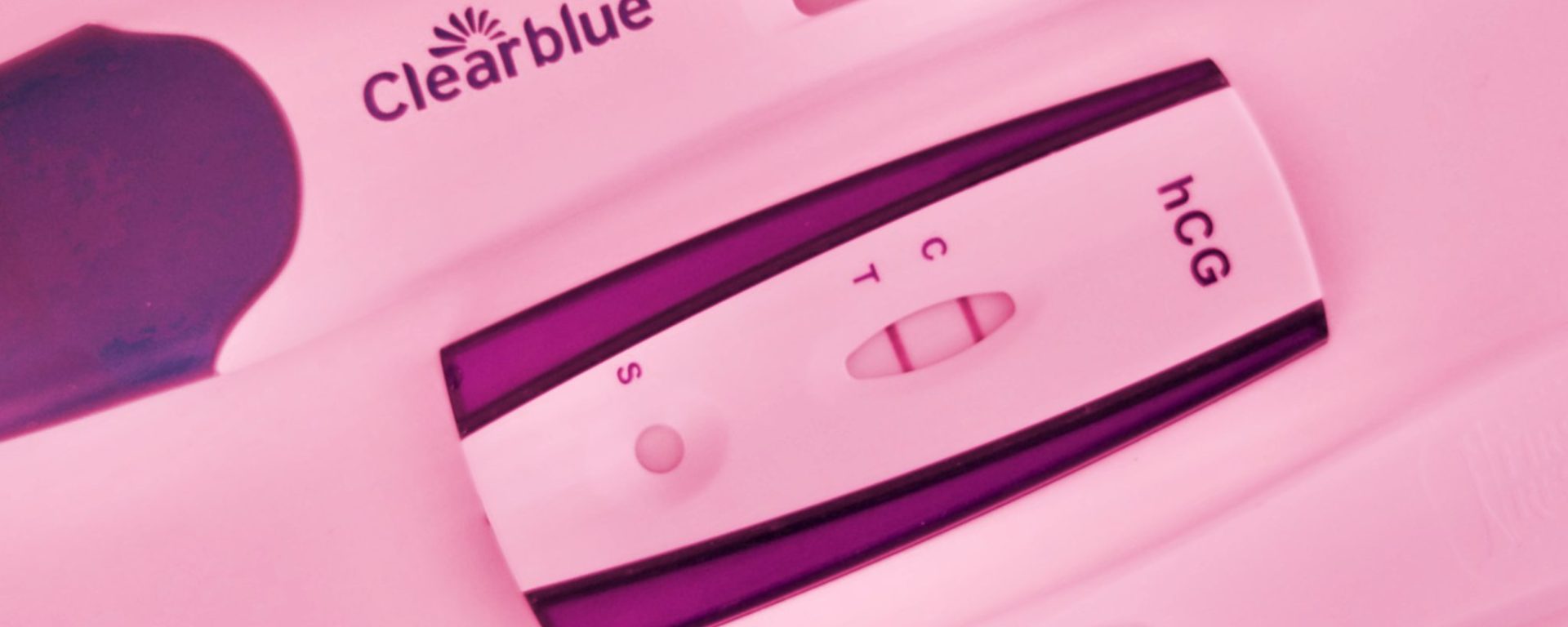
“I took a pregnancy test last night,” she said. “It was positive. So I’m pregnant.”
I nodded, and looked out the window, towards the Brooklyn-Queens Expressway just beyond the school, towards the rest of the city and Long Island and the sea. Finally I said, “What do you think about that?”
“I don’t know. That’s why I wanted to talk.”
“I see.”
With careful questions, I pulled the story out of her. He was a good guy, she said, her boyfriend at another school. He hadn’t pressured her into sex and he wasn’t pressuring her about the pregnancy. I didn’t ask if she’d used birth control, or what kind, there in the late afternoon light already starting to turn gold in February. Even the best fails, especially in the fumbling hands of teenagers. And I didn’t ask How could you or what were you thinking. I remember being sixteen. I remember being small and prone to bad fashion choices. I remember wanting something beautiful for myself. I remember wanting to say yes when the whole world was telling me no.
“What do you think your options are?” I asked.
“I mean, I could get an abortion,” she said. “Or I could have the baby. Or give it up for adoption, I guess.”
“That sounds like a pretty complete list.”
“I think I might want to get an abortion.”
#
I taught a girl who had her fourth abortion at seventeen. I taught another girl who dropped her six-month-old off at the day care center in the high school every morning before she came to class, and another girl who had a baby just before the first day of school in her senior year only to come back and be the class valedictorian. I taught a girl who wrote about giving oral sex to a boy she knew. She was crying and didn’t want to do it. She was thirteen.
I asked Marci if she knew how to get an abortion safely. She spoke of a clinic in her neighborhood where friends and cousins had gone. The only advice I gave her was to consider telling her mother, a woman I’d met at several parent-teacher conferences by then. She always seemed kind, but tired—understandably so, given her physical and emotional journeys, her relentless advocacy in a language not her first on behalf of her disabled child. “I know that not everyone would want to tell their parents in your situation,” I said. “But everything I know about your mother— I think she’ll be all right, and I think she’ll help you with whatever you decide. But it’s up to you.”
She nodded. “Anyway, I just wanted to talk to somebody,” she said, and performed the familiar gesture, tucking her hair behind her ears, behind her hearing aids and her glasses. “I have to think.”
“Definitely,” I said. “But if you want to talk again, I’m here.”
She paused. I hoped that she wouldn’t ask me what I thought. I didn’t want to speak from authority when the only authority that mattered was hers.
All I know is that I gave her a space, and some time. Even if the space was cluttered and aged, even if the time was borrowed and getting shorter, I gave it to her.
And then she hugged me, and thanked me, and left.
#
In the Book of Numbers, provision is made for testing a woman’s fidelity to her husband by asking her to drink “bitter water,” a concoction of water, dirt, and dust from a temple scroll. If the woman has been faithful, the bitter water will have no effect; if not, “the curse shall enter into her and become bitter,” in which case her “belly will swell, and [her] thigh [will] fall away.” (The “thigh” is a euphemism for the sexual organs, including the uterus and its contents.)
It’s worth noting that many interpreters of the passage in Numbers read it as protective of women and their bodies. The bitter water as described in the text is unlikely to have much effect at all, on a fetus or a woman’s body as a whole; moreover, the woman is not forced to drink the water, but does so voluntarily under the supervision of the temple priest. Theoretically, any woman who undertook this ordeal would come out unscathed, with the temple’s proclamation that she has been divinely found innocent. But I find this interpretation unsatisfying. A woman’s choice to engage with such a trial would have been so circumscribed as to not be much of a choice at all, and its conclusion may not have seemed foregone to those participating in it. Any men with whom the unfortunate women may have theoretically committed their crimes are notably absent from the proceedings. And, of course, the ritual still places men and their egos, their inflamed senses of property and justice at the center of reproductive decisions and their ramifications.
My old pastor Donna once mused that, for most of human history, only men have had the life-and-death power to choose. They have ordered young men to fight wars and in so doing signed the death warrants of the peoples in their paths. They have opted not to enact legislation to provide food, shelter, health care, and legal protections that would allow vulnerable people to live and flourish. They have overseen hideous rituals of torture and execution upon the guilty, the innocent, and everyone in between. Billions have died— many painfully, consciously, and slowly— as direct results of men’s power to choose. It seems that it is not the power to choose that sits uneasily with so many who call themselves, hollowly, “pro-life”; rather, it is the power being in the hands and hearts of ordinary women and girls.
#
I will end Marci’s story here. I have changed her name and some identifying details, but I am still telling her story, and as much as possible, I will have it remain hers. She did speak to her mother. She surrounded herself with people who placed her at the center of her choice. I was and am unspeakably honored to have been one of them. I will not tell you what she chose, but the choice was hers.
I will say that I would not have had Marci drink bitter water. I wanted her to be safe, first, and then I wanted her to be able to tell the truth—I am pregnant, and I do not know what to do now—and then choose. It is precisely because we live in a world that does not honor Marci’s vulnerability that she deserved the chance to make that choice. Anyone claiming otherwise would only keep her in a pose of supplication, hoping that someone else finds her worthy and good rather than being able to rest in that knowledge herself.
Like many of my former students, Marci is my friend on Facebook. I looked her up last week. The tenor of her posts is cheery and off-kilter, with plenty of eyeroll emojis. She no longer dyes her hair and sports a long dark brown bob and sleeker glasses. She is a preschool teacher. She looks like a woman now. She has a beautiful smile. She always did.
About the Author
Abigail Myers writes poetry, fiction, and creative nonfiction on Long Island, New York. Her fiction has recently appeared in Milk Candy Review (Best Small Fictions 2024 nomination), Major 7th, Rejection Letters, Roi Fainéant, and Cowboy Jamboree Press’s MOTEL anthology. Her essays have recently appeared in Variant Literature (Best Spiritual Literature 2024 nomination), Phoebe, Pensive, Tiny Molecules, Willows Wept Review, The Dodge, and The Other Journal. Her poetry has appeared in Icebreakers Lit (Best of the Net 2024 nomination), Amethyst Review, Full Mood Mag, Sylvia, Hearth and Coffin, Resurrection Mag, and more. Keep up with her at abigailmyers.com and @abigailmyers on Twitter and Bluesky.
Share your story about women’s rights.
We are poised for further erosion of women’s rights in the coming year. The communities we build today will help us weather the storm and build a foundation for a better future for ourselves, our daughters and granddaughters. There has always been a power in stories and art.
Share your story. Read others. Take Action.
We have opened up submissions to include visual essays, creative nonfiction and poetry. Submission are open through March 2025 and all accepted work will be considered for inclusion in an anthology documenting this pivotal election year.
 Tangled Locks Journal 📓 is pis of a yypyyyoe