
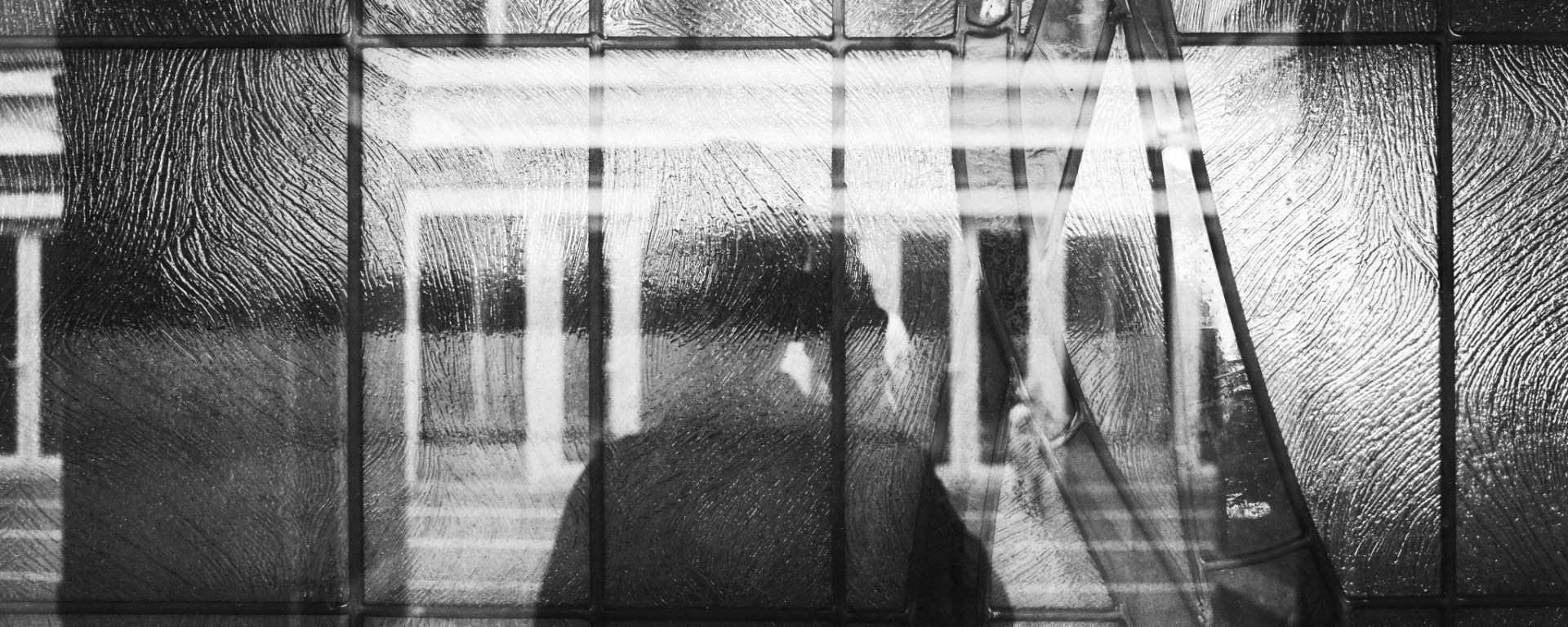
Somewhere along the line, at some unknown point in time, she became invisible. It didn’t seem to happen all at once; more of a melting, blending kind of thing, as if someone had shaded her outline a little too closely to what surrounded her. At first, it happened only when she stood in line, waiting behind others for what should have been her turn. She could tell that not all of the women were invisible; the young and pretty ones got to go first. Anyone with eyes could see that. They were behind the men, who were behind the rich and famous, who went first every time, in every line. She was somewhere after the beautiful younger women, and behind teens and young adults, but somewhere before the children and old people, way at the end, the very last.
Nobody seemed to question their place in line. It was just what it had always been, and even she didn’t question it much, other than to notice at times that her feet and back hurt from standing for so long and from holding so much. She held more than the rich and famous did, and more than most of the men, and more than many of the beautiful women, too. She held neighborhoods and schools and jobs and family, on her shoulders and in her hands and on her mind. She would shift in line, trying to redistribute the weight, trying to balance it all. All of the women in line in her section were juggling, trying not to drop anything while they waited.
She didn’t realize she was invisible, in fact, until she bumped into another woman while she was juggling. She knew the other woman was there and could see her, struggling to focus on keeping it all in the air. She knew that sense of not being sure how long things could stay suspended that way. She lost her own concentration and one of her commitments went crashing to the ground.
“Excuse me,” she said, stooping to pick up her commitment. It was chipped along one side. The commitments should have been constructed of rubber and not glass. They were fragile and didn’t bounce very well.
The woman next to her just kept juggling, not even glancing her way. It was as if she hadn’t been there and hadn’t spoken at all.
She wandered up the line, leaving her space. She spoke with the men. She spoke to one of the beautiful young women, jewels glinting in her ears and on her fingers. She spoke to one of the rich people in the very front, asking them what it was they could still need and what they were waiting for.
None of them heard her. None of them could see her.
She wandered past her spot in the line, to where the children and old people stood. She asked them what they wanted, although she already knew, of course. The children wanted to grow up. The old people wanted to grow young. Nobody questioned these things. It was simply accepted, just one of those things.
None of them could see or hear her either.
The woman made an appointment to see her doctor, which meant she had to stand in a different line. The nurse called her name in the waiting room, but didn’t see her sitting there, even after she waved her arms and shouted. She followed her anyway, back into the doctor’s examination room, slipping into the paper gown and hopping up onto the table.
The doctor entered the room after knocking. “Hello?”
“I’m here,” said the woman. “Can’t you see me? Nobody else can see me.”
She was becoming more anxious. Where would she finally be seen?
The doctor extended her own warm hand and touched her shoulder. She slipped the ends of the stethoscope into her ears and listened.
“I can tell you’re here,” she said to what seemed to her to be an empty room. “I can hear your heart. I’ve seen this happen to other women.” She took a tiny bottle out of the cupboard. “I’ll write you a prescription for these, but just in case they can’t see you at the pharmacy, take these with you.”
The woman didn’t like to swallow things whole, especially things that she didn’t know the meaning of or the reason for. But she was feeling desperate. It’s a hollow feeling to know nobody can see you and nobody can hear you.
So she thanked the doctor—although the doctor couldn’t hear her—and made her way back out to the waiting room, where she swallowed the first pill and headed back outside.
“Good morning,” she said to a woman in the parking lot. The woman looked up at her with bleary eyes as she struggled to pull a toddler from a car seat.
“Hello,” she said.
“You can see me?” she asked.
The woman looked at her the way she might look at a talking traffic cone or a dancing fire hydrant.
“Of course I can see you,” she said. “You’re in my way.”
The woman shouted with exhilaration. As fast as she could, she returned to the original line, the line where we all wait for everything, all the time. She started with the men.
“Can you see me?” she asked.
One of them looked up from their phone.
“Yes,” he said. “You could lose a few pounds.”
She sighed in exasperation. “Can you see me?” she asked one of the young and beautiful women. She glanced up from her compact mirror.
“Yes,” she said. “You can’t take my spot, though.”
The woman sighed again. She went to the rich and famous section.
“Can you see me?” she asked.
“Yes, I can see you,” said the woman in her silver gown and glittering heels. Her entire being shone and shimmered.
Finally, the woman who could now be seen went to the back of the line, with the children and the old people.
“Can you see me?” she asked a little girl holding a stuffed penguin.
“Yes,” said the little girl, smiling. “Want to play?”
“Can you see me?” she asked an older man, stooping forward onto his cane.
“I need better glasses,” he said, “but I can see you well enough.”
The woman was now satisfied that she was seen by everyone. Those pills really worked!
“Don’t grow up so fast that you miss it all,” she told the little girl holding the penguin.
The child turned her head away. She didn’t answer.
“Being young wasn’t all it’s supposed to be,” she told the man with the cane. “Do you remember?”
He looked down at the ground and didn’t respond.
She wandered back up to the young and beautiful woman.
“Your days here are numbered,” she told the bejeweled woman. “There’s someone right behind you.”
The woman gave no indication she had heard her.
She went back up to the man on her phone.
“Why do you get to tell me what I should look like?” she asked. “When do I get to tell you what I’d like you to look like instead?”
He continued to stare down at his phone, scrolling for something he didn’t seem to be able to find.
She decided not to speak to the rich and famous woman. If the others couldn’t hear her, there was no reason to think it would be any different.
As the woman returned to her spot in the original line, the line we all wait in, she heard the voice of another woman: “I can see you now.”
She turned to see her doctor. She was surprised the doctor wasn’t further up in line—they made a lot of money, for sure–but she could see she had many things to juggle, just like she did herself.
“The medicine only worked so I am seen and not listened to,” she said, unsure if the doctor could even hear her. But the doctor sighed and nodded.
“There’s limits on what medicine can cure,” she said. “We can only listen to the people in our section. The others can hear, but they don’t listen.”
“That’s awful!” said the woman. “But before the pill not even a woman in my own section could see me. What’s the point if we can’t listen to anyone else except those like ourselves?”
The doctor shrugged and began to juggle a calendar, her own bottle of pills, a sack of groceries, and several pairs of shoes.
“Echoes don’t listen either, really,” she said. “They can only repeat.”
About the author:
Heather Bartos writes both fiction and nonfiction. Her essays have appeared in Fatal Flaw, McNeese Review, HerStry, LitroUSA, and elsewhere. Her flash fiction and short stories have appeared in Baltimore Review, Tangled Locks Journal, Ponder Review, Orca, Relief: A Journal of Art and Faith, and elsewhere.

 Tangled Locks Journal 📓 is pis of a yypyyyoe