
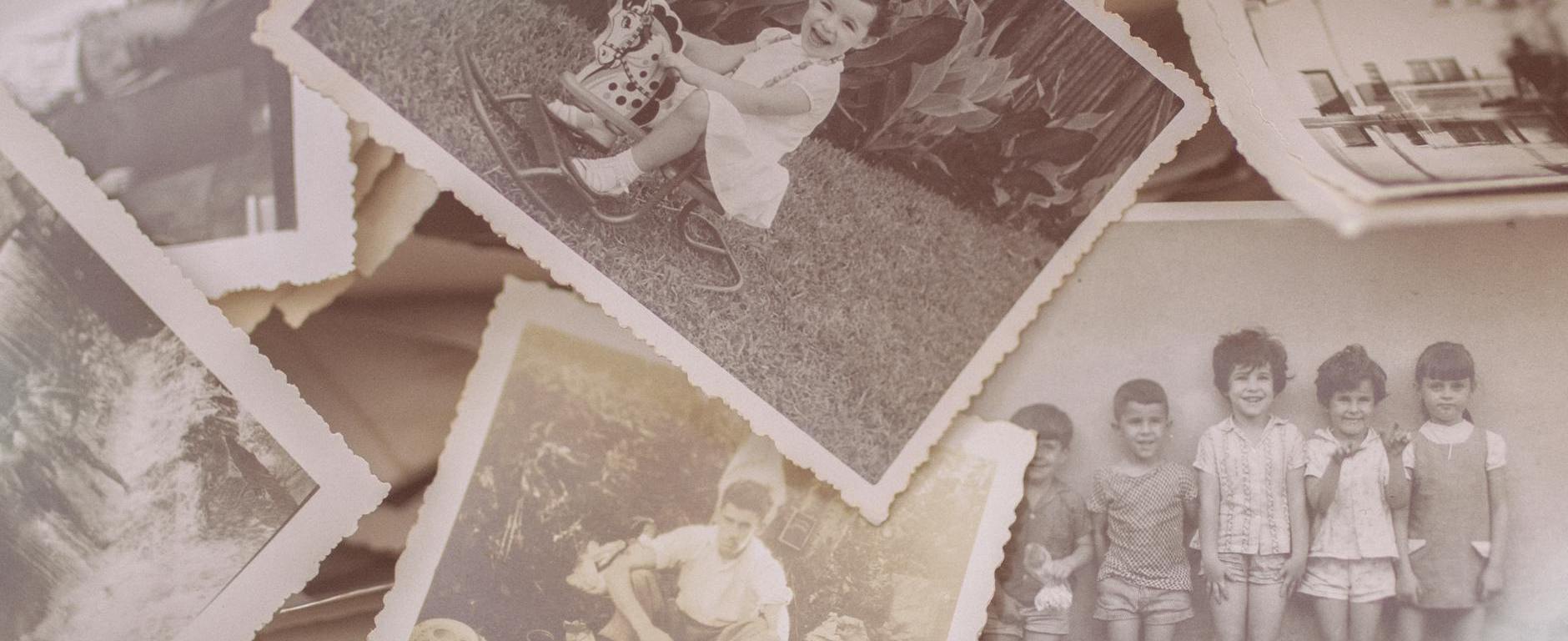
A little before one o’clock on a Sunday afternoon in 1993, it began to rain photographs in Newport. It was the last week in February, and many had been commenting that the winter had been colder than normal, but without any snow. This distinction made it difficult to complain, because while the cold was oppressive, it seemed neutered without the snow. Some said that they didn’t mind how cold it got as long as it didn’t snow. That’s why when the first photograph floated down, one of the old men sitting at the bar inside the Gaslamp Grille looked out and said “I knew it would snow eventually. This whole town is going to hell.”
That first photograph was of a young woman in a wedding dress sitting on the steps of a church looking to her left. If you saw the photograph, you would get the impression that the woman was looking for her groom, but that the person approaching her from the left was not the groom. It’s impossible to say how one could interpret this all from a photograph, but that’s what an image does sometimes. It gives you a story by tapping on parts of your mind you didn’t know were there. You see a woman in a wedding dress and you know she isn’t getting married. You know her groom is never showing up.
Cora Mission was the person to pick up the photograph. She had never seen a photograph lying on the street. When she saw the image of the young woman, something in her slipped a bit. It wasn’t a shift, but a stumble. Her breath doubled and sweat appeared on the back of her neck. She knew this woman, and she had never seen her before in her life. There was familiarity and foreignness. She ran up the hill to her house on Kay Street and called for her husband, James. They had been married for four years and considered themselves to be fairly happy. When James ran down the stairs assuming Cora was hurt in some way, he found her standing in their front hallway holding a photograph like it was a smoking gun.
“You never showed up,” said Cora, shaking her head, “Why didn’t you show up”
James didn’t know what she meant. He descended the rest of the stairs and took the photo from her. He looked at the photo. The young woman was looking to her left. James had never been more right. He wondered what kind of apology was needed here. How do you apologize to someone who doesn’t exist?
“I couldn’t,” he said, “Not that time.”
Without meaning to, he looked beyond Cora out the window next to the door in the front hall. A photograph was falling. Then, another.
“Cora,” he said, almost grateful for the subject change, “Why is it raining photographs?”
By the time Cora turned around to see for herself, the first inch of photos had already fallen. Before the precipitation was done, there would be two feet on the ground. Photographs are not like snow. They’re not easily shoveled away. Not just because of their density, but because there’s an urge to pick them up and inspect them. Nobody ever feels the need to inspect snow.
Cora’s brother Turner found himself holding two photos in his car as the heat was running outside the Red Parrot restaurant. In one, there was a man holding a baby. The man was smiling and the baby boy was smiling back at him without knowing what a smile was. Is it still happiness if the newly-born person hasn’t yet learned what happiness is yet? In the other photo, there was no baby. Just a man in a rocking chair reading a book. Turner couldn’t make out what book it was, but he suspected it was Sense and Sensibility. A part of him had always felt drawn to Austen, but never bothered to pursue that literary desire.
“Isn’t that your dad sitting outside,” one of the waitresses asks.
Turner’s son, Andy, has just visited his third table of the day. Business had been slow, because nobody was quite sure how to drive into photography. New Englanders like to boast that they can handle any kind of weather, but this one was throwing them. Andy’s manager went outside at one point, picked up a photo, and came back looking ashen. He told Andy that the photograph was of a man he didn’t recognize.
“He never bought that house,” his manager said, “Why didn’t he buy the house?”
Andy had no answer for him. He thought of that interaction as he was looking outside at his father sitting in the driver’s seat of his 1990 Pontiac with the engine still running. He thought about going out there and knocking on the window, but something told him to stay where he was. There was a veil of privacy around the car, and as the windows fogged up, Andy said a little prayer to himself that everything would be all right.
The waitress who asked after Andy’s father was named Sierra. She left her shift that night, and saw the emergency dispatch teams that had been sent out from the city to clean up all the photos. The trouble was, the members of the team kept stopping to look at what they were picking up. As soon as they did, they often became overwhelmed and began to walk home. That meant more people had to be called in, and all these staffing issues meant the photographs might still be on the ground for days to come.
Sierra had decided she would not pick up a photo. She was going to be the one who survived the horror movie. The character in the disaster flick who listened to the scientist. The heroine of a novel who could hear the narrator foretelling doom. It wasn’t until she entered her apartment that she realized a photo had gotten stuck to the bottom of her shoe. Without meaning to, she plucked it off and saw a much older woman standing behind the counter at a diner. Sierra didn’t recognize the woman or the diner, but her lips quivered all the same.
“No,” she said, “You wouldn’t stay there. You would have left a long time ago.”
As if to answer her, the photograph began to dissolve in her hand. Sierra could swear that the woman was beginning to turn away as the photo evaporated.
The incident with the photos was never spoken of after the clean-up was done. People love to talk about unusual events, especially ones involving the weather, but for some reason, this one was tucked away in memory and never brought out again. It was not written about nor did anybody think to take photographs of the photographs.
“Why take a photo of a photo,” the people in town asked each other, as if that was the only answer they needed to put the whole mess behind them.
Had any of them ever seen a photo of a photo?
No.
Not a single one of them could say they had.
About the author:
Kevin B is a writer and poet from New England. Their work has appeared in Esoterica, Molecule, Quarter Press, Havik, New Plains Review, and Q. They are the Barely Seen Featured Poet of 2023 and the George Lila Award winner for Short Fiction. (Instagram: KBJR0719)

 Tangled Locks Journal 📓 is pis of a yypyyyoe